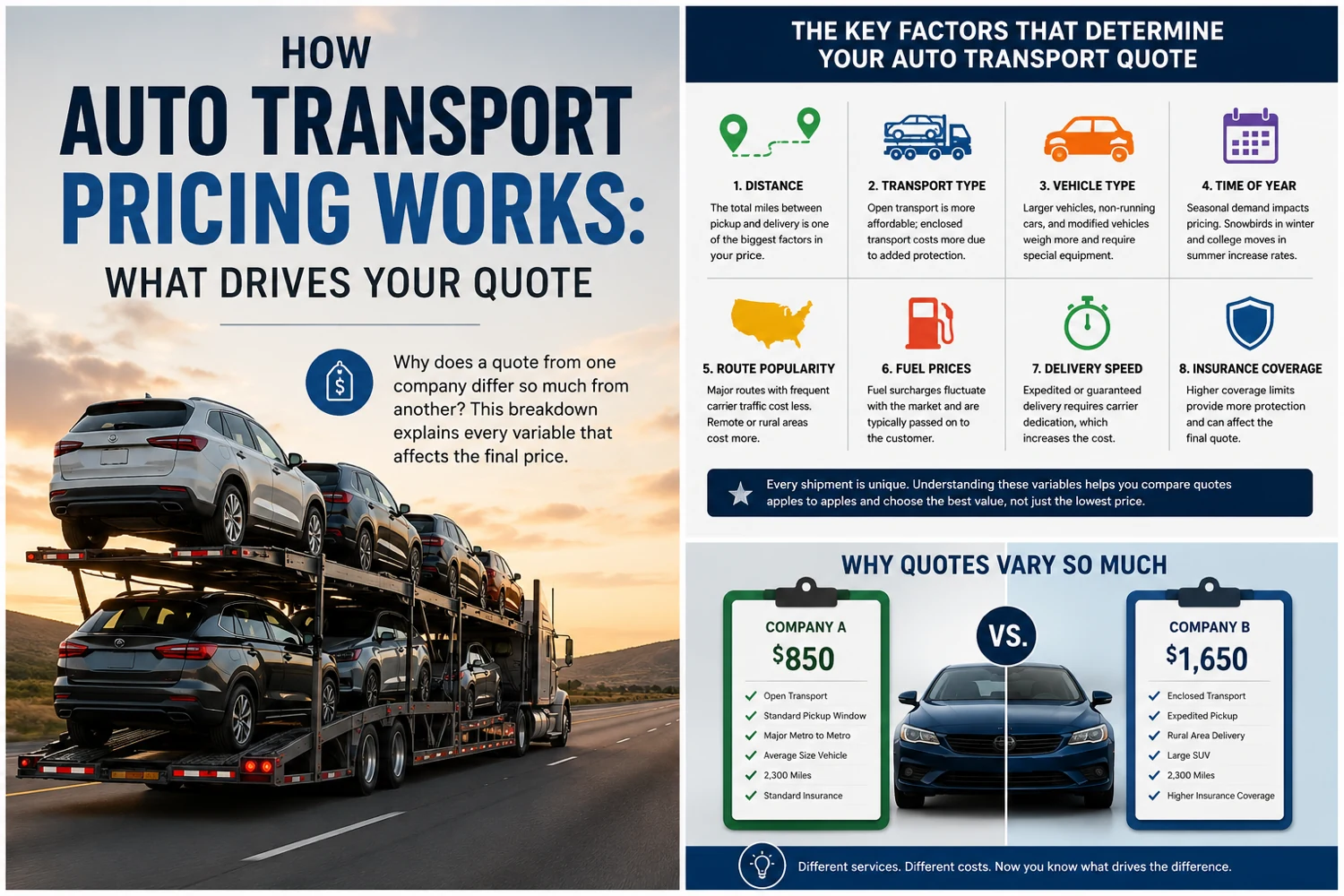
Auto transport pricing can feel opaque. Quotes vary by hundreds of dollars for what looks like the same shipment. Here's exactly what drives the number you're quoted.
Route Distance
The single largest factor. Cost per mile decreases as distance increases — a 500-mile shipment often costs more per mile than a 2,000-mile move because the carrier's fixed overhead (fuel deadhead, driver time) is spread over fewer revenue miles.
Route Popularity
High-volume corridors like LA–Phoenix or Chicago–Miami attract more carriers, creating competition that keeps prices lower. Niche routes to smaller cities or rural areas cost more because fewer carriers run them — and the ones who do know they're your only option.
Vehicle Size & Type
A carrier earns the same revenue hauling 10 compact cars as it does hauling 6 full-size trucks, but trucks take more space. Large SUVs, dually trucks, and lifted vehicles carry a size surcharge — typically $100–$300 over a standard sedan.
Open vs. Enclosed
Enclosed trailers carry 2–6 vehicles versus 8–10 for open carriers. The revenue per load is lower, so the per-vehicle rate is higher. Expect to pay 40–80% more for enclosed service on any given route.
Inoperable Vehicle
If your car doesn't drive, loading it requires a winch or forklift. This adds $150–$300 to any shipment and may limit your carrier options.
Pickup & Delivery Timing
Flexible windows (3–5 days) allow carriers to optimize their routes and almost always produce the lowest quote. Expedited service — guaranteed pickup within 24–48 hours — carries a premium of $200–$500 on most routes.
Time of Year
Snowbird season (October–December and March–May) on Florida-bound corridors routinely inflates prices. Same with summer on Northeast routes when families relocate. Book early or lean into flexibility to beat seasonal spikes.
Broker vs. Direct Carrier
Most auto transport companies are brokers who post your load to a network of licensed carriers. This is the industry standard and not inherently more expensive — brokers have negotiating leverage that individual customers don't. The key is using a broker with a strong carrier network and transparent pricing.