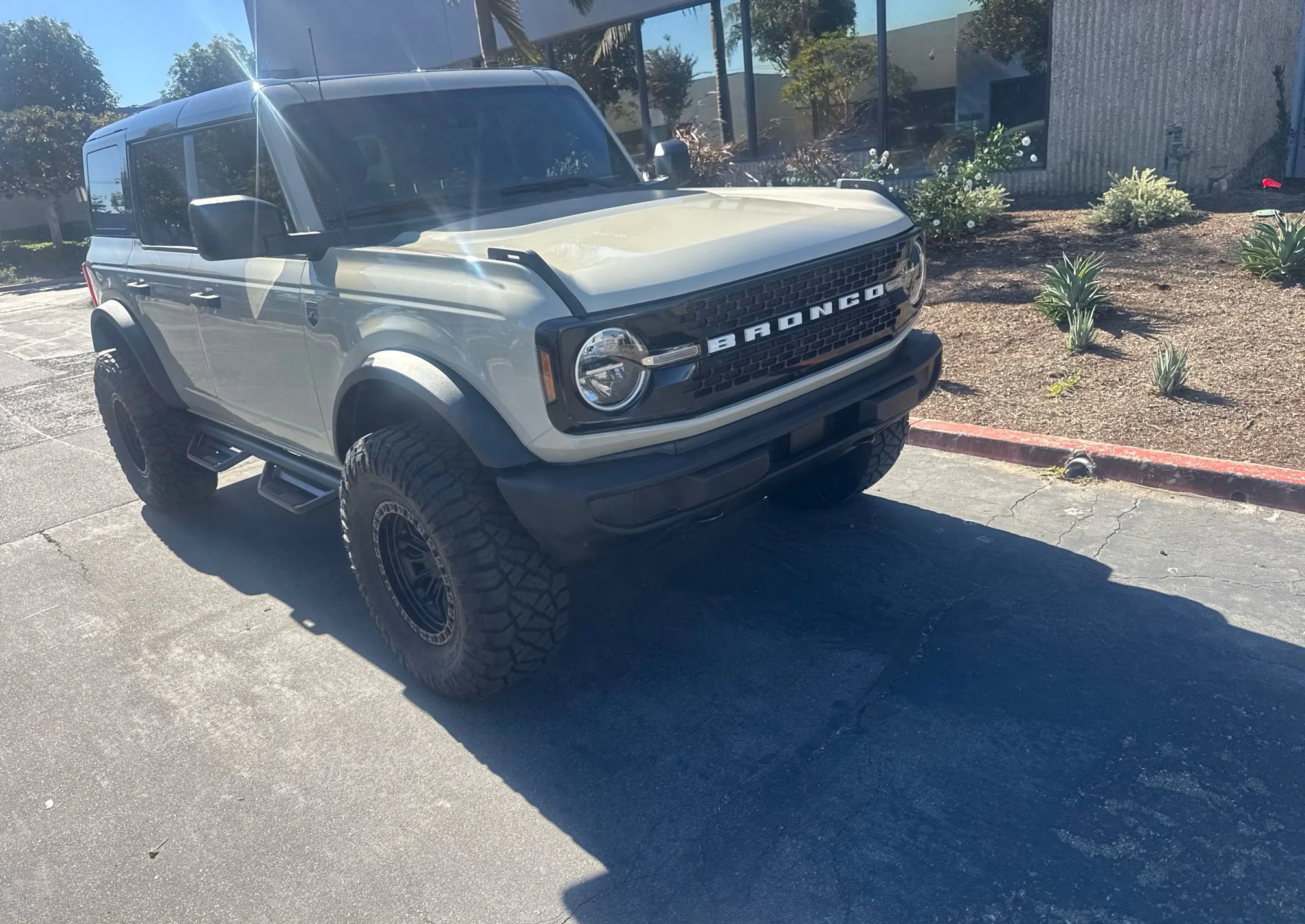
Shipping a custom Ford Bronco starts with the vehicle's actual measurements. Larger tires, different wheels, suspension changes and a rear-mounted spare can affect the space it needs on a trailer. Give your transport coordinator current photos and modification details before a carrier is assigned.
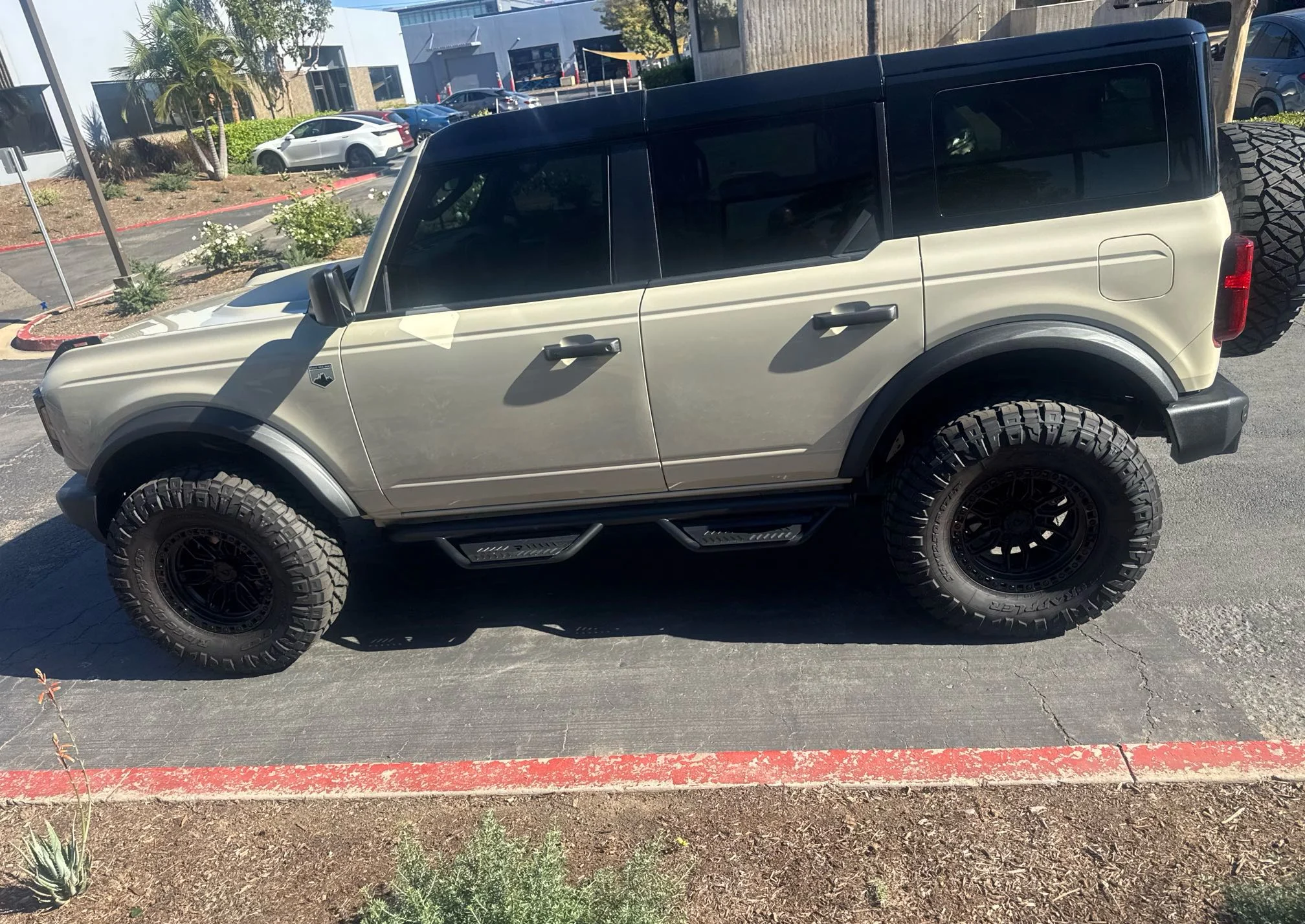
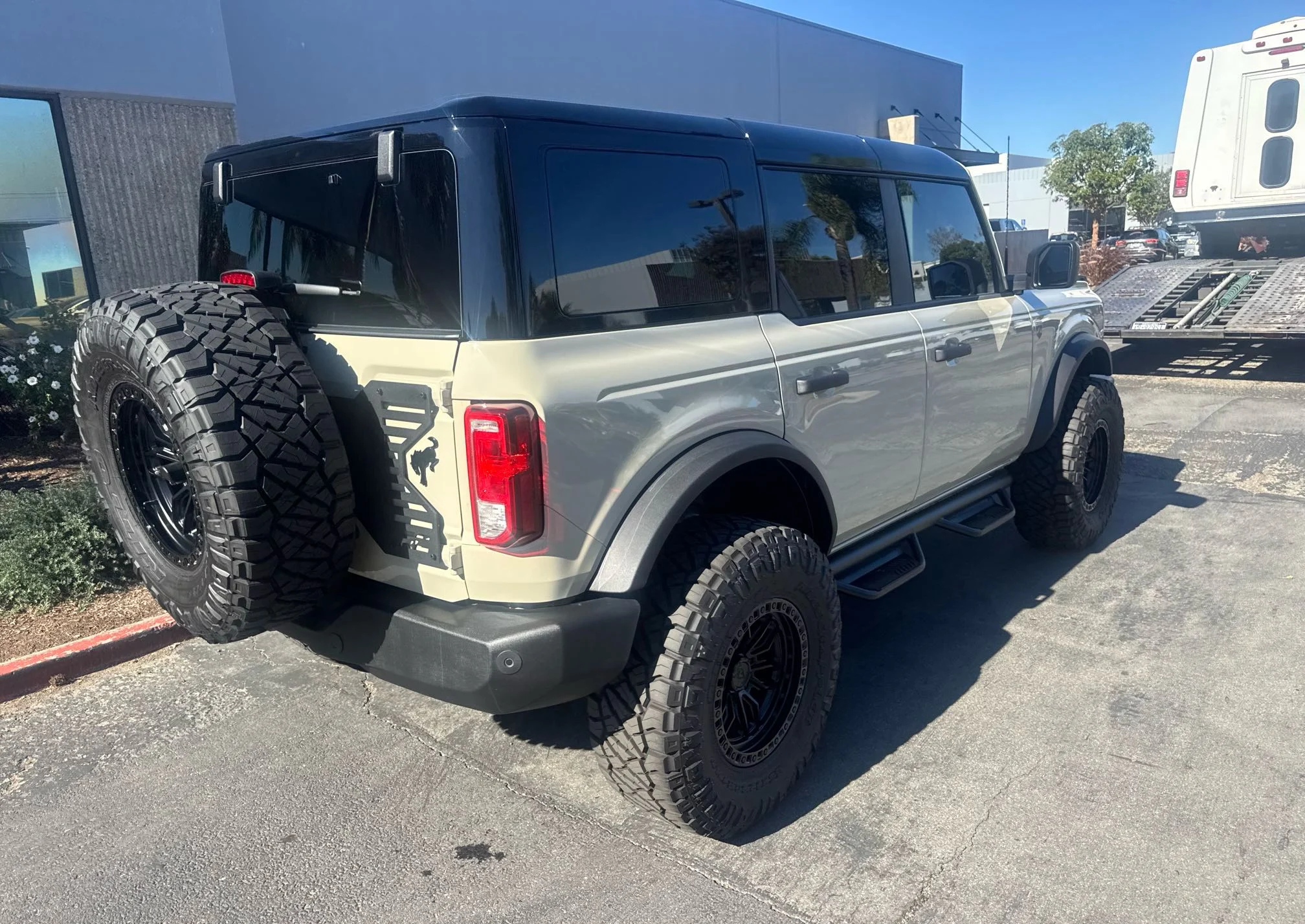
The Bronco pictured here was photographed at pickup in Irvine, California, on October 15, 2026. Its large off-road tires, black wheels, side steps and rear spare make it a useful example of what to document when arranging transport for a customized SUV. Photos alone do not establish its exact tire size, suspension setup or overall dimensions.
Measure the custom Bronco, not just the factory specification
Start with the correct model year and configuration in Ford's owner-manual library, then measure the vehicle in the condition in which it will ship. Factory specifications cannot account for every aftermarket wheel, tire or accessory combination.
- Overall height: measure on level ground to the highest installed point, including any roof equipment.
- Overall width: identify the widest point, including tires or accessories that extend beyond the body. Tell the coordinator whether the mirrors fold.
- Overall length: include the rear-mounted spare and any rack, hitch accessory or other projection.
- Weight and equipment: disclose permanent additions and any cargo you intend to leave inside. Ask what is permitted before packing the vehicle.
Send front, rear and side photos along with the measurements. The carrier needs to assess ramp and deck compatibility, overhead clearance and the complete vehicle's footprint. A standard SUV description is not enough to confirm that a customized Bronco fits a particular trailer.
Why tires, wheels and side steps matter
A wider tire-and-wheel setup can change the vehicle's outer width and the space its tires occupy on the loading equipment. A suspension change can alter overall height. Side steps and other low-mounted accessories still need clearance as the vehicle moves between the ground, ramps and trailer deck.
Let the carrier plan loading and securement using the vehicle manufacturer's guidance and the requirements of its equipment. Do not lower tire pressure or remove parts simply to make a vehicle fit without an agreed, appropriate procedure. Flag any special operating instructions before pickup, especially if a modification affects steering, braking or how the vehicle can be moved.
Open or enclosed transport for a modified Bronco?
Open transport can be suitable when the assigned carrier confirms fit and you accept exposure to weather and road conditions. Customization alone does not automatically require an enclosed trailer.
Enclosed transport provides a covered ride and may suit an owner who wants additional protection for a special finish or valuable build. However, the trailer's door opening, interior clearance and loading equipment must still accommodate the Bronco. Discuss the vehicle's value, finish, dimensions and your preferences when comparing options. Our open versus enclosed transport guide explains the broader differences.
Prepare the Bronco for pickup
Confirm that the vehicle starts, rolls, steers and brakes, and disclose any problems before dispatch. Tell the coordinator about leaks, battery issues or other conditions that could affect loading. Secure the roof, windows and installed accessories according to their manufacturers' instructions. Remove valuables and loose items, and ask which removable accessories should travel separately.
For a dealership or customization-shop pickup, confirm that the vehicle is ready for release. Provide a named contact, collection hours and any release instructions. The truck also needs a suitable place to load; agree on an accessible meeting point if the pickup property cannot accommodate the carrier.
Document the custom parts at both handovers
Take clear photographs of the body, glass, wheels, tires, side steps and rear spare. Record existing marks on the pickup condition report and keep a copy. If you cannot attend, arrange for an authorized person to participate in the handover.
At delivery, compare the vehicle with the pickup record before completing the inspection. Document any concerns and follow the carrier's written reporting process. Ask about cargo coverage and any limitations relevant to custom equipment before booking, rather than assuming every aftermarket part is treated the same way.
Get a quote that reflects the actual build
Provide pickup and delivery ZIP codes, the earliest ready date, exact model year, operating condition, modifications and measured dimensions. Route, carrier availability, transport type and special loading requirements affect the options and price. Photos support the quote, but they do not replace the carrier's confirmation that the vehicle fits.
Caravan Transport is an auto transport brokerage: we arrange transportation with a carrier. The FMCSA's automobile-transporter advisory explains that distinction and how to check registration. To plan a custom Bronco shipment, request a quote and include the details of your build.
Frequently asked questions
- Can a custom Ford Bronco ship on an open carrier?
- Yes, when the assigned carrier confirms that the actual vehicle fits its trailer and loading equipment. Send measurements, photos and modification details before dispatch. Customization alone does not require enclosed transport.
- What measurements are needed for a modified Bronco?
- Provide actual overall height, width and length in its shipping configuration. Include oversized tires, roof equipment, the rear-mounted spare and any other projections, and disclose permanent equipment that affects weight.
- Do larger tires change the shipping quote?
- They can affect trailer compatibility and available carrier options. The impact depends on the complete vehicle's dimensions, the route and the equipment required. Give the coordinator the actual tire setup and measurements rather than relying on the factory specification.