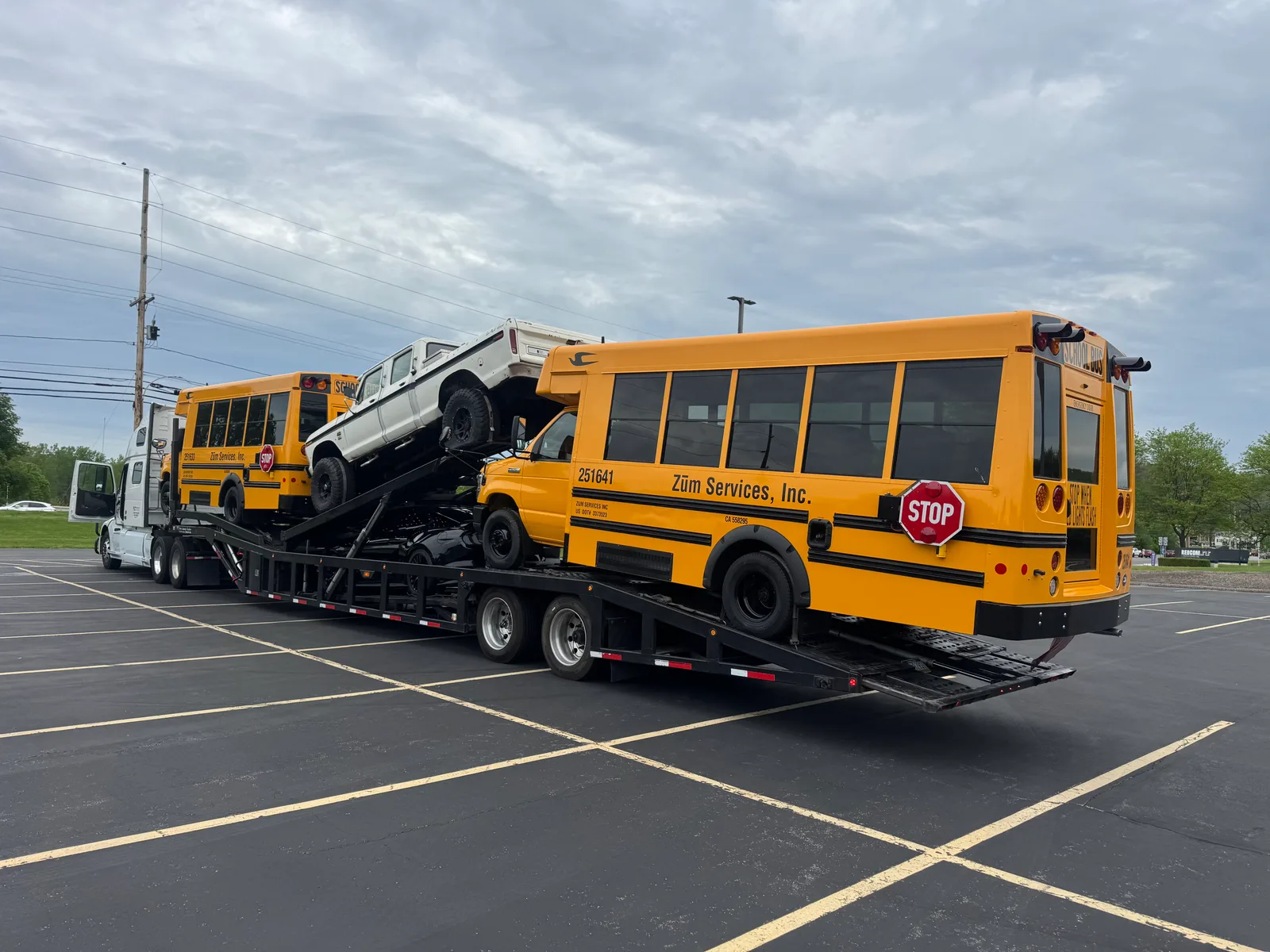
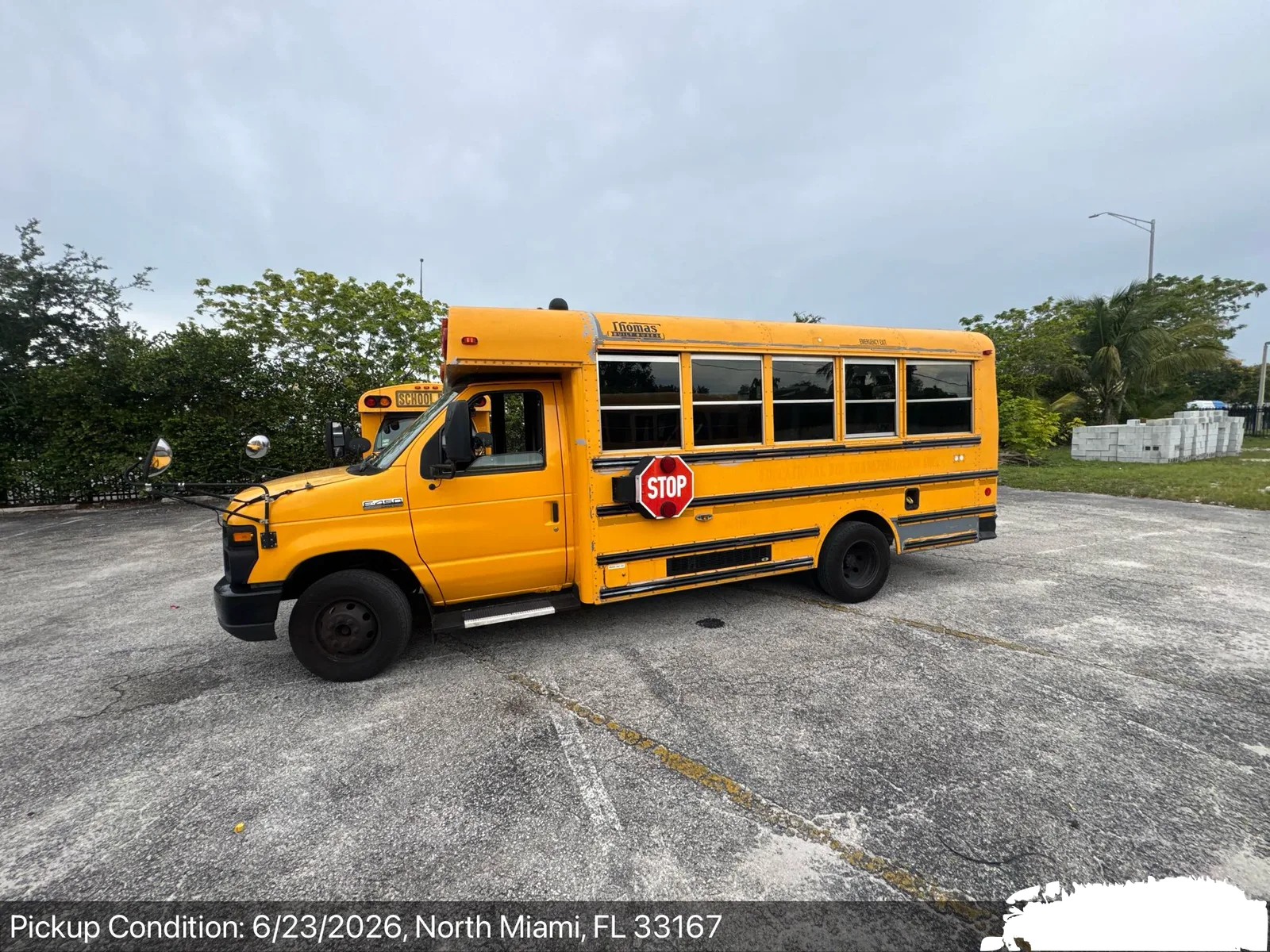
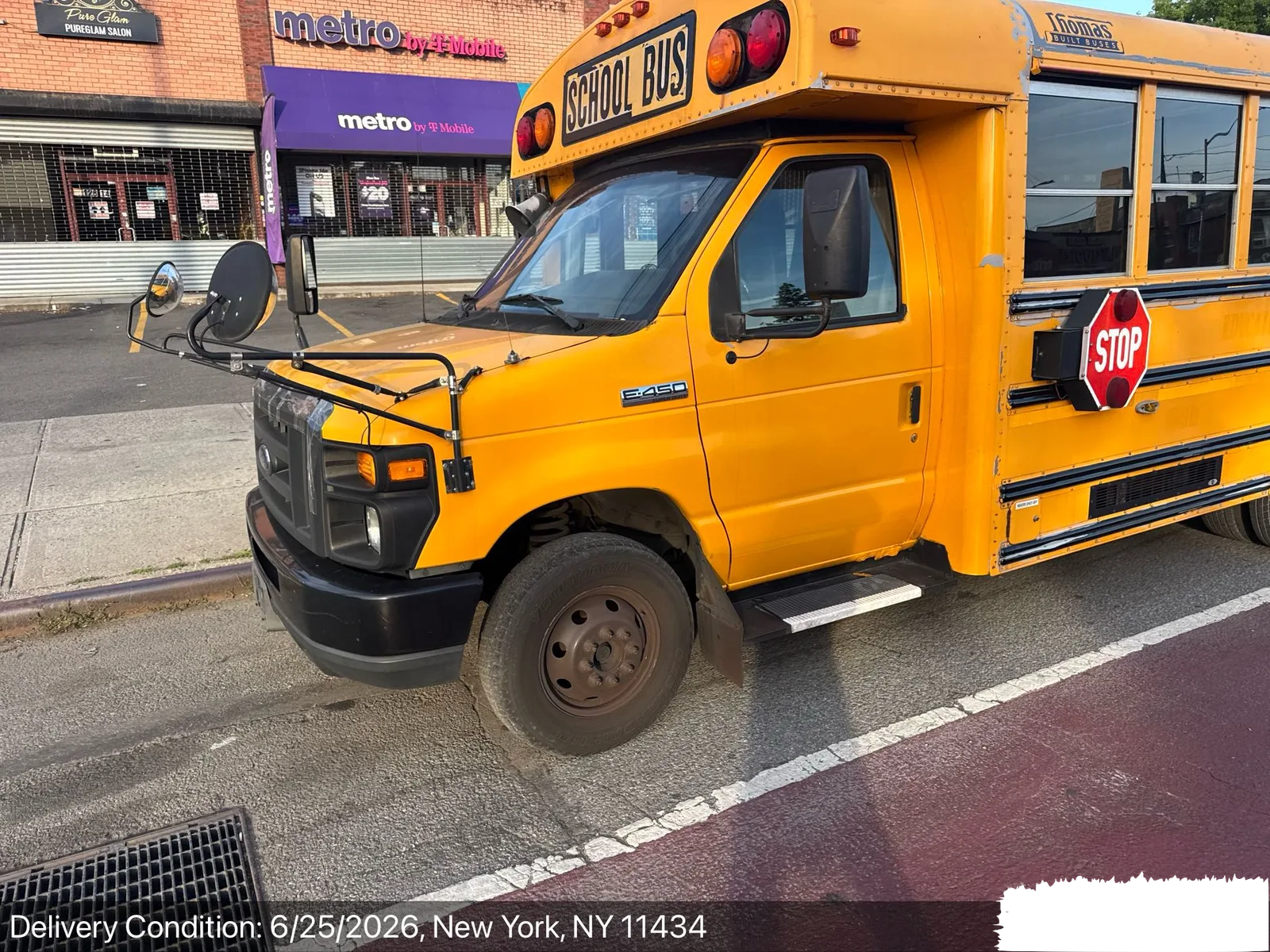
"Can you even ship a school bus?" We get the question a lot, and the answer is yes — buses move on carriers every week. They just need the right equipment and accurate measurements, because a bus is taller, longer, and heavier than the cars sharing the road with it. Here is a recent one we handled: a set of short school buses relocated for a student-transportation operator, picked up in North Miami and delivered up to the New York City area.
The move at a glance
- Vehicles: short Type A school buses (cutaway Ford chassis), part of a student-transportation fleet.
- Route: North Miami, FL to the New York City area — about 1,300 miles.
- Transit: picked up June 23, delivered June 25 — roughly two days.
- Transport: open carrier, $0 upfront, condition photos at pickup, loading, and delivery.
Bus size decides everything
The single most important number when you ship a bus is its height, followed by length and weight. Short Type A buses like these — built on a cutaway van chassis, roughly 20 to 25 feet long and around 9 to 10 feet tall — fit on standard open carriers, flatbeds, and hotshot trailers. Full-size Type C and Type D buses (35 to 40 feet) are a different job: they ride on a flatbed, step-deck, or RGN trailer, and at certain heights and lengths they require oversize permits and route planning. Tell us the real dimensions up front and we put the bus on the right trailer the first time.
Does it run? That changes the load plan
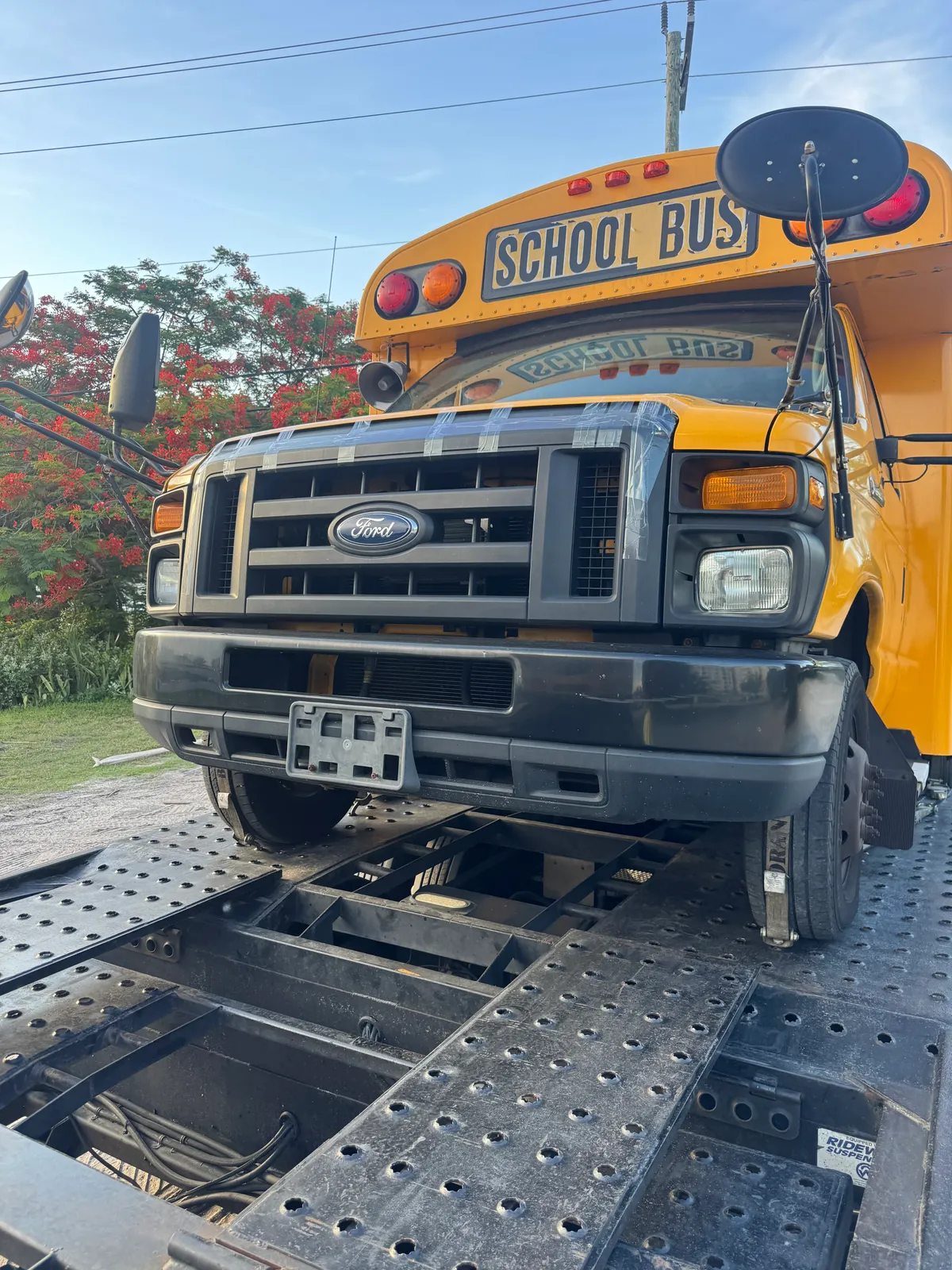
A bus that starts and drives loads under its own power up the ramp. A non-running bus — common with retired fleet units and skoolie projects — has to be winched on, which means the carrier needs a winch and the right loading spot. It is completely doable either way; the driver just needs to know before they arrive so they bring the right truck. The same goes for buses with low ground clearance, lift gates, or roof-mounted equipment.
Open carrier or flatbed?
Most buses ship just fine on an open carrier — it is the standard, best-value option, and that is how these went. Taller or longer units that will not sit under an upper deck ride on a dedicated flatbed or step-deck instead. Enclosed transport exists for buses but is rare and expensive; it really only makes sense for a show-quality or fully converted coach. For fleet and work buses, open or flatbed is almost always the right call.
Moving a whole fleet
Relocating several buses at once — like a student-transportation operator opening a new yard or selling units across the country — is its own kind of project. We stage pickups and deliveries so the operation keeps running, match each bus to a carrier that fits its size, and keep one point of contact across the whole move instead of a different driver's number for every unit. It is the same approach we take with any commercial fleet relocation.
What it costs to ship a bus
Bus shipping is priced on distance, size, running condition, and trailer type. A short Type A bus on an open carrier is closest to a large van or box truck in cost; a full-size bus on a flatbed with permits costs more because it ties up specialized equipment. The honest answer is that buses are quoted individually — there is too much variation in size and condition for a one-size estimate. Send us the dimensions and a photo and we will price it for real.
Shipping a school bus — or a fleet of them?
We move school buses, shuttle buses, and skoolie conversions cross-country — including lanes like Florida to New York. Tell us the length, height, and whether it runs, and we will match it to the right carrier. Get a quote or call and we will handle the logistics end to end.