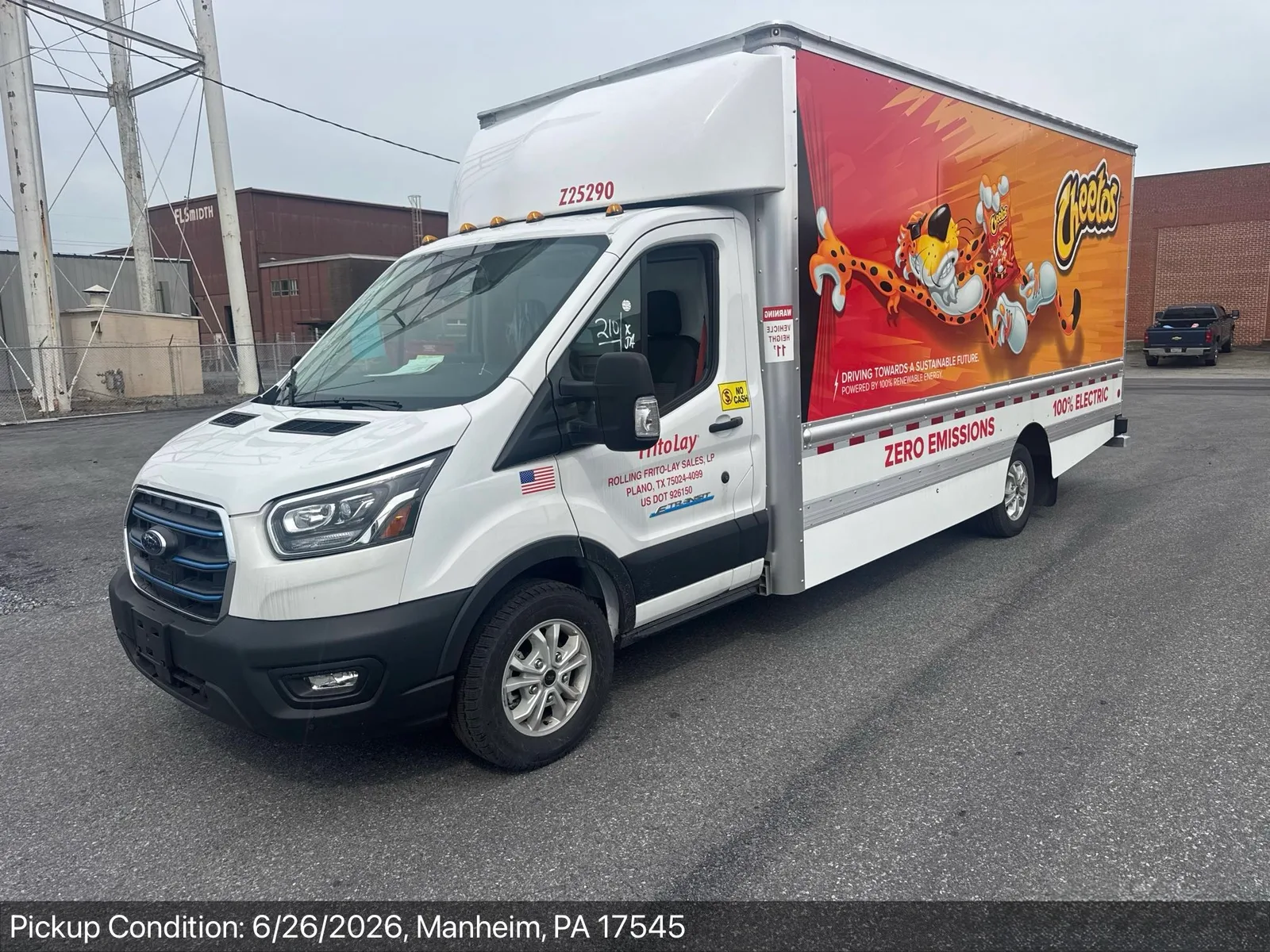
Electric work vehicles are showing up in every fleet in America — route trucks, delivery vans, service vehicles — and they all share one problem: sometimes the truck is in Pennsylvania and the route is in California. Driving an EV box truck 2,700 miles on charging stops isn't a plan; a carrier is. Here's a recent one: a fully wrapped Ford E-Transit box truck, moved coast to coast in three days.
The move at a glance
- Vehicle: Ford E-Transit — a 100% electric box truck with a full commercial wrap, 11 feet tall per the height sticker on the cab.
- Route: Manheim, PA to City of Industry, CA — about 2,700 miles, coast to coast.
- Transit: picked up June 26, delivered June 29 — three days, door to door.
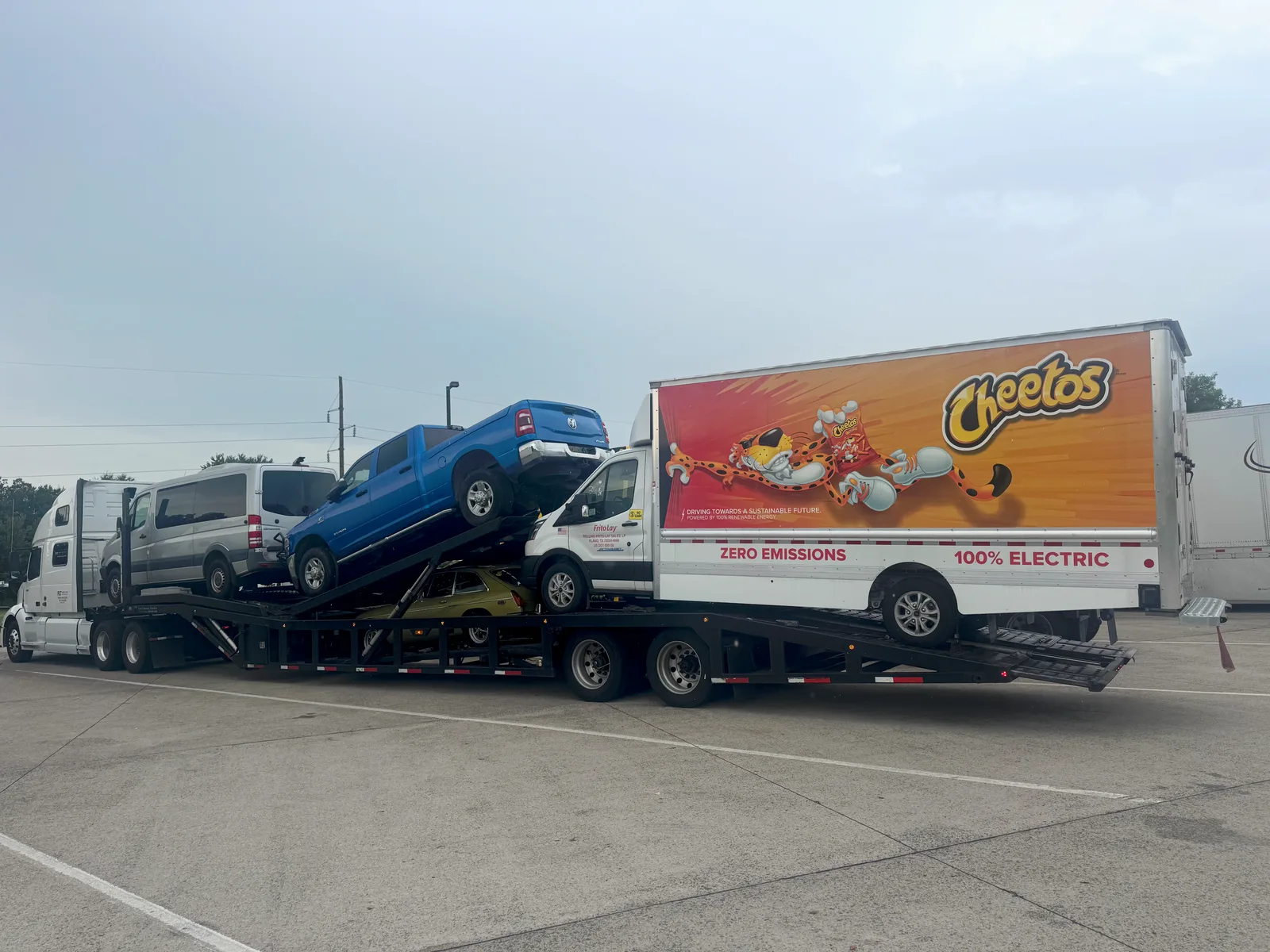
- Transport: open carrier, rear single-deck slot, condition photos at pickup, loading, and delivery.
Height decides the carrier slot
The height sticker inside the cab says it plainly: 11 feet. That's too tall to ride under the upper deck of a standard double-decker carrier, so this truck rode the rear single-deck position — the same slot where high-roof vans, buses, and boxed vehicles go. There's no mystery to it: give us the real height at booking and the dispatcher assigns a carrier with the right slot open. Guess the height, and the wrong truck shows up.
What changes when the truck is electric
Shipping an EV is mostly like shipping anything else, with three practical differences:
- Weight. Battery packs make EVs meaningfully heavier than their gas equivalents, and carriers plan loads around total weight, not just space. An electric box truck takes more of the trailer's weight budget — one more reason accurate specs at booking matter.
- Charge level. The truck loads and unloads under its own power, so it needs charge — but not a full battery. Partial charge is the standard practice for transport; enough to drive on and off the trailer with margin.
- No idling, no fluids. EVs don't leak and don't need to warm up — carriers like them. Everything else, from tie-down points to condition photos, works the same.
For the full checklist — charge targets, key handoff, and what to tell the carrier — see our guide to EV auto transport.
Wrapped vehicles carry the brand — protect it
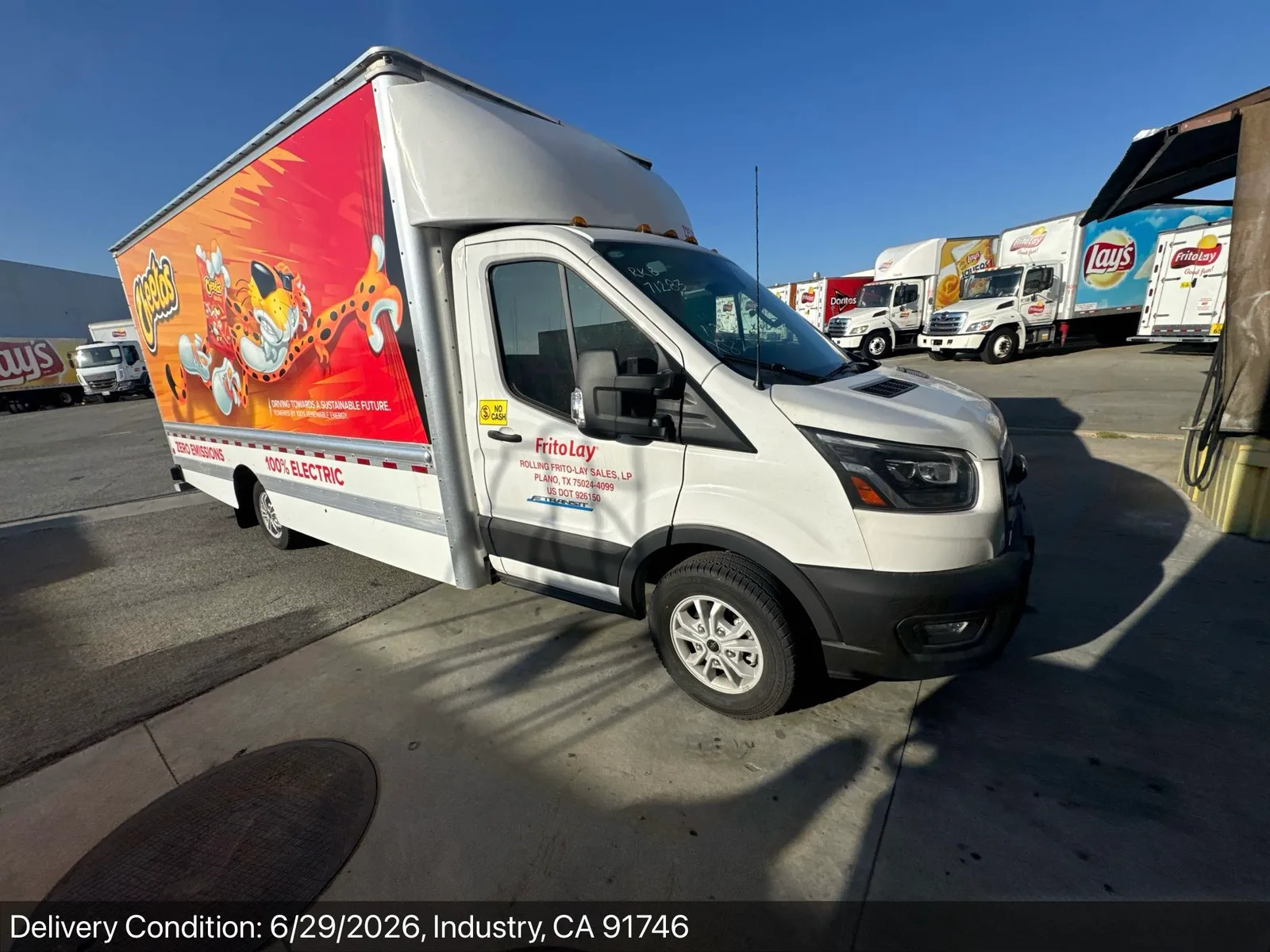
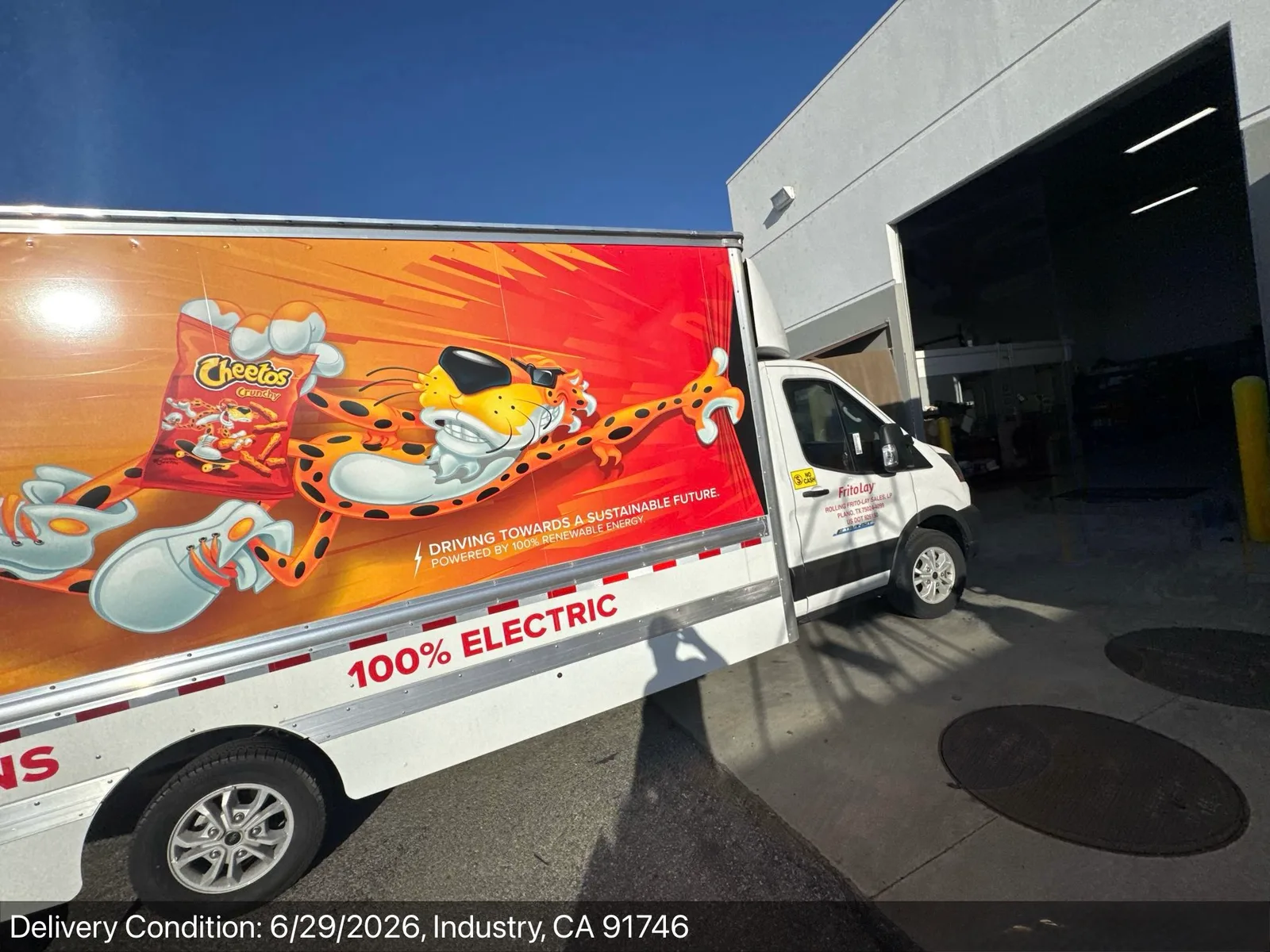
This truck is a rolling billboard, and it arrived with the wrap exactly as it left. On open transport, wrapped vehicles ride fine the vast majority of the time; for a wrap-critical launch vehicle or a one-of-one design, enclosed transport removes road exposure entirely. Either way, the time-stamped condition photos at both ends are what document the wrap arrived clean — panel by panel.
Moving electric fleet vehicles?
As fleets electrify, unit moves like this one are becoming routine — new EVs going from upfitters and staging lots to the depots where they'll run routes. We ship electric vans, box trucks, and cars coast to coast, handle multi-unit fleet moves, and treat every wrapped vehicle like the brand asset it is. Tell us the height, the weight, and where it's going — get a quote and we'll put it on the right trailer.